
In short
Before buying a used car, check the ownership and chassis number, the available history, a cold start, the bodywork, tires, brakes, electronics and the condition on a lift. A test drive and an independent inspection should come before a deposit or final decision whenever possible.
Start with the papers and the chassis number
Compare the seller with the documents, and the chassis number on the vehicle with the registration certificate and supporting papers. An unclear chain of ownership does not become clearer because the car runs well.
A service book is useful when backed by invoices, work orders and logical dates and mileage. Stamps with nothing behind them are not enough.
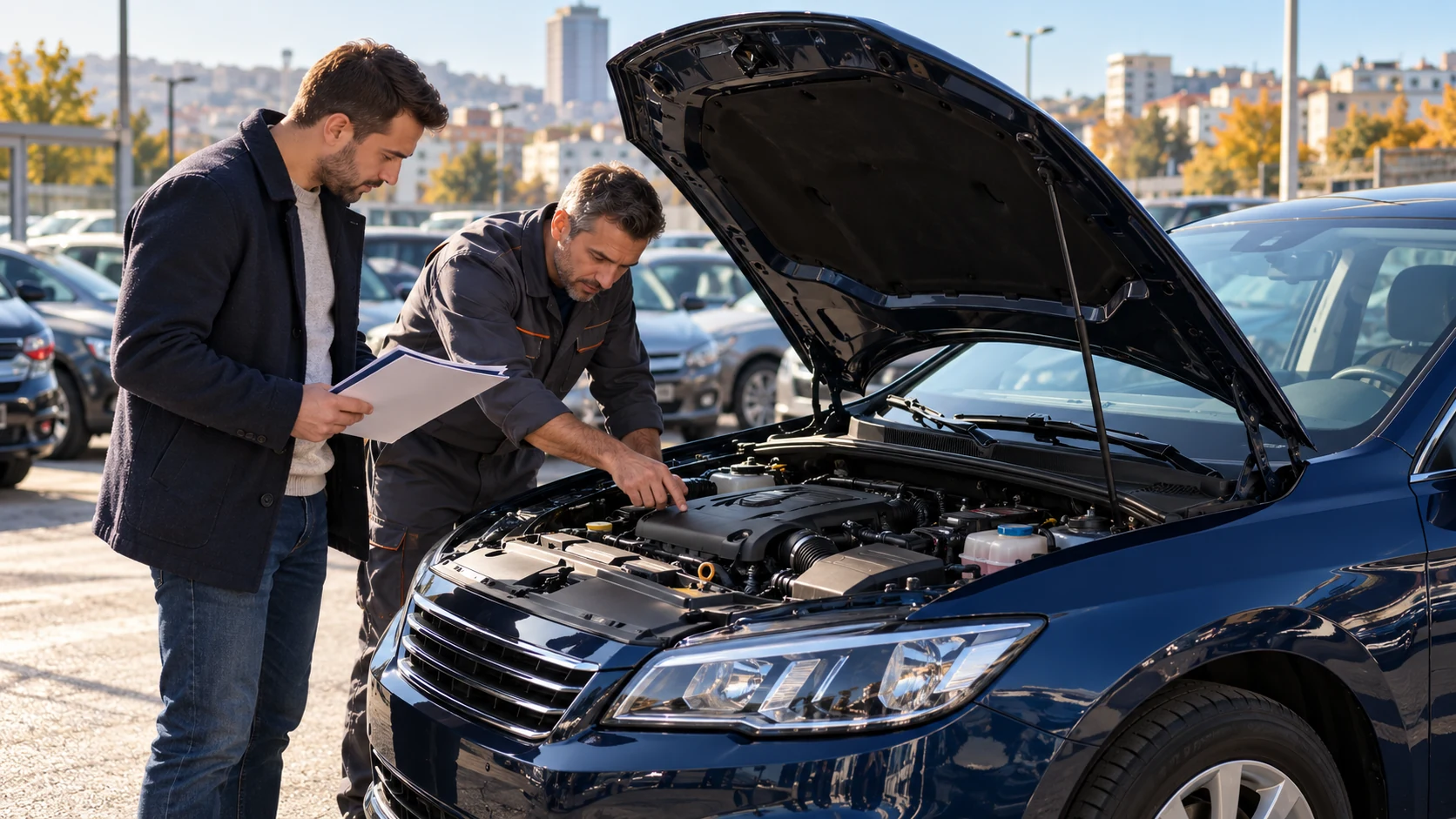
Ask for the engine to be cold
A cold start can show ignition, smoke, sound and running that are not noticeable on a warm engine. Do not touch hot parts and do not open the cooling system.
Look at fluid levels and traces of leaks, but do not draw conclusions only from how clean the engine bay is. A freshly washed engine can also hide a trace.
A test drive should have a plan
Check pulling away, the gearbox, braking, tracking, vibration, sound over bumps, air conditioning and electrical functions. A two-minute drive around a flat parking lot is not representative.
If the seller refuses a reasonable inspection or test drive for no clear reason, that is information to include in your decision.
A lift and diagnostics give the other part of the picture
An underbody check can reveal leaks, corrosion, signs of impact and the condition of the suspension. Diagnostics reads records and data, but it does not by itself confirm the whole mechanical history.
Finally, ask for a list of findings by priority and a cost range. The goal is not a perfect used car, but a known risk and a price that matches it.
Key points
Three things to remember
- 01
Check the vehicle's identity and ownership before forming a technical impression.
- 02
Ask for a cold start and a service center inspection free of sales pressure.
- 03
Leave budget for an initial service, registration and possible defects.
FAQ
Straight answers
Does a mileage check guarantee the real condition?
No single check guarantees the whole history. Records, invoices, the state of the interior, modules and service logic are compared.
Does diagnostics reveal all faults?
No. It reveals codes and data from monitored systems, but the mechanical condition and bodywork need a separate inspection.
When should I pay a deposit?
Only when the terms are clear and the scope of the check is acceptable. Put the deposit terms in writing, especially if the vehicle still has to be inspected further.
Sources and further reading
This article is informational. Check regulations, conditions and changing figures before a specific procedure.