In short
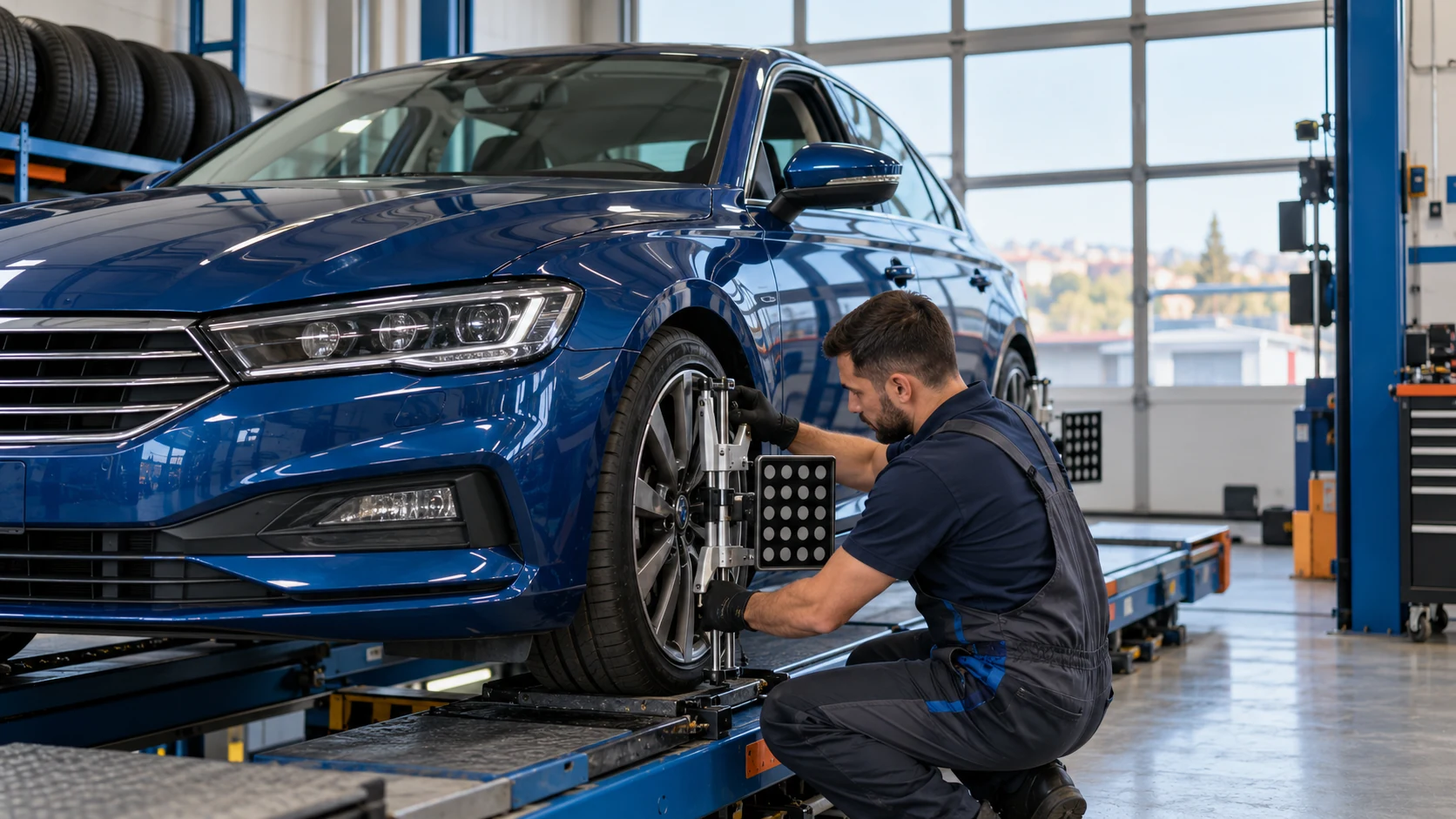
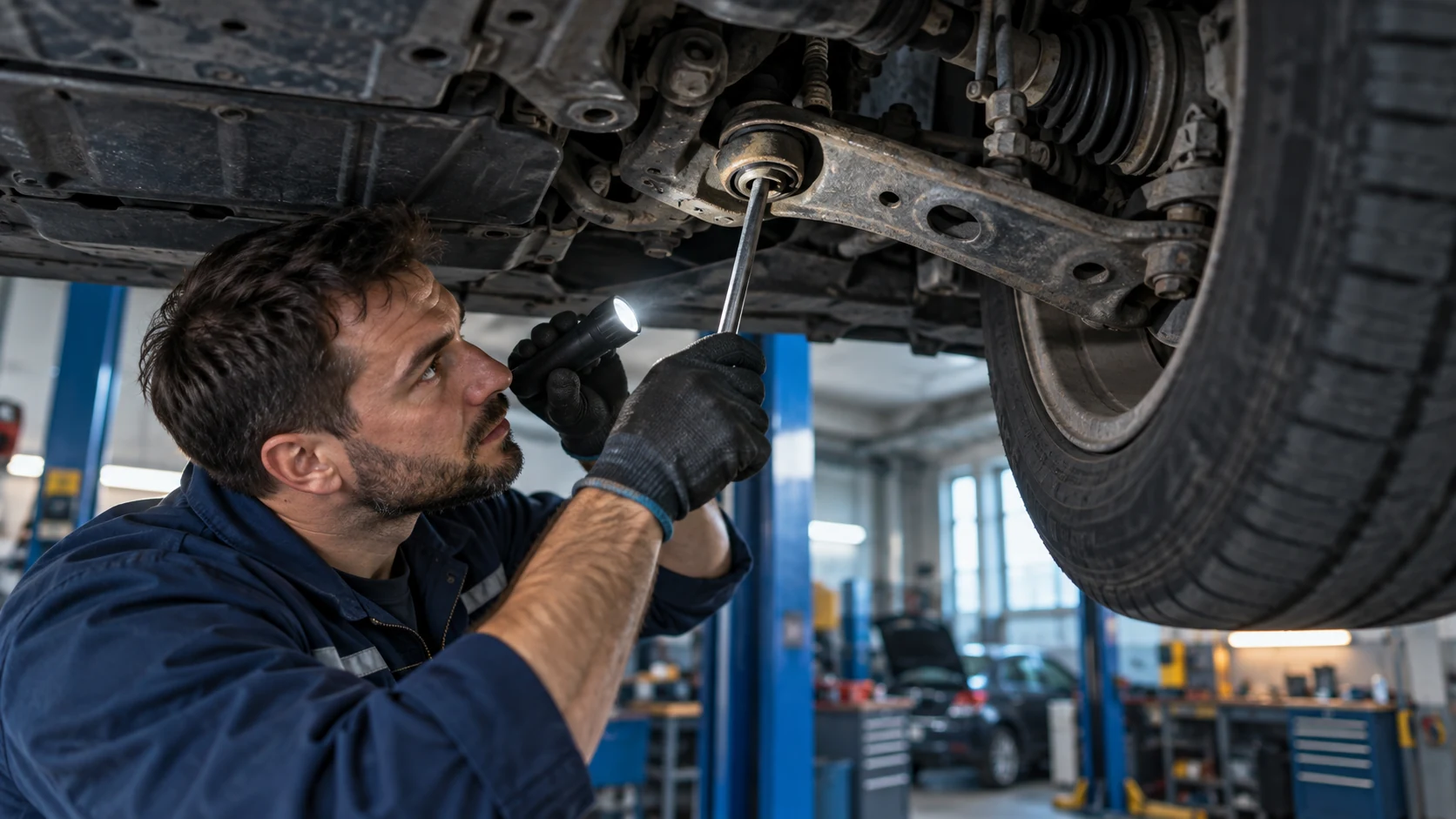
Before a long trip, check the tires and pressure for the load, the brakes, fluid levels and condition, the battery and charging, lights, wipers, air conditioning and mandatory equipment. If there is a noise, warning light, leak or other change, report it early enough to leave time for diagnostics and any repair.
Do not book the check the evening before you leave
If the check reveals a worn tire, a weak battery or a leak, you need an appointment, a part and time to verify the work. A check makes sense when it leaves room for a decision.
Tell the service center the length of the trip, the expected load and any existing symptom. A city car with two people and a fully loaded car on the highway are not the same load.
Tires and brakes carry most of the change
Check the pressure on cold tires and look up the recommendation for a full load. Inspect the tread, sidewalls, and the spare wheel or temporary repair kit.
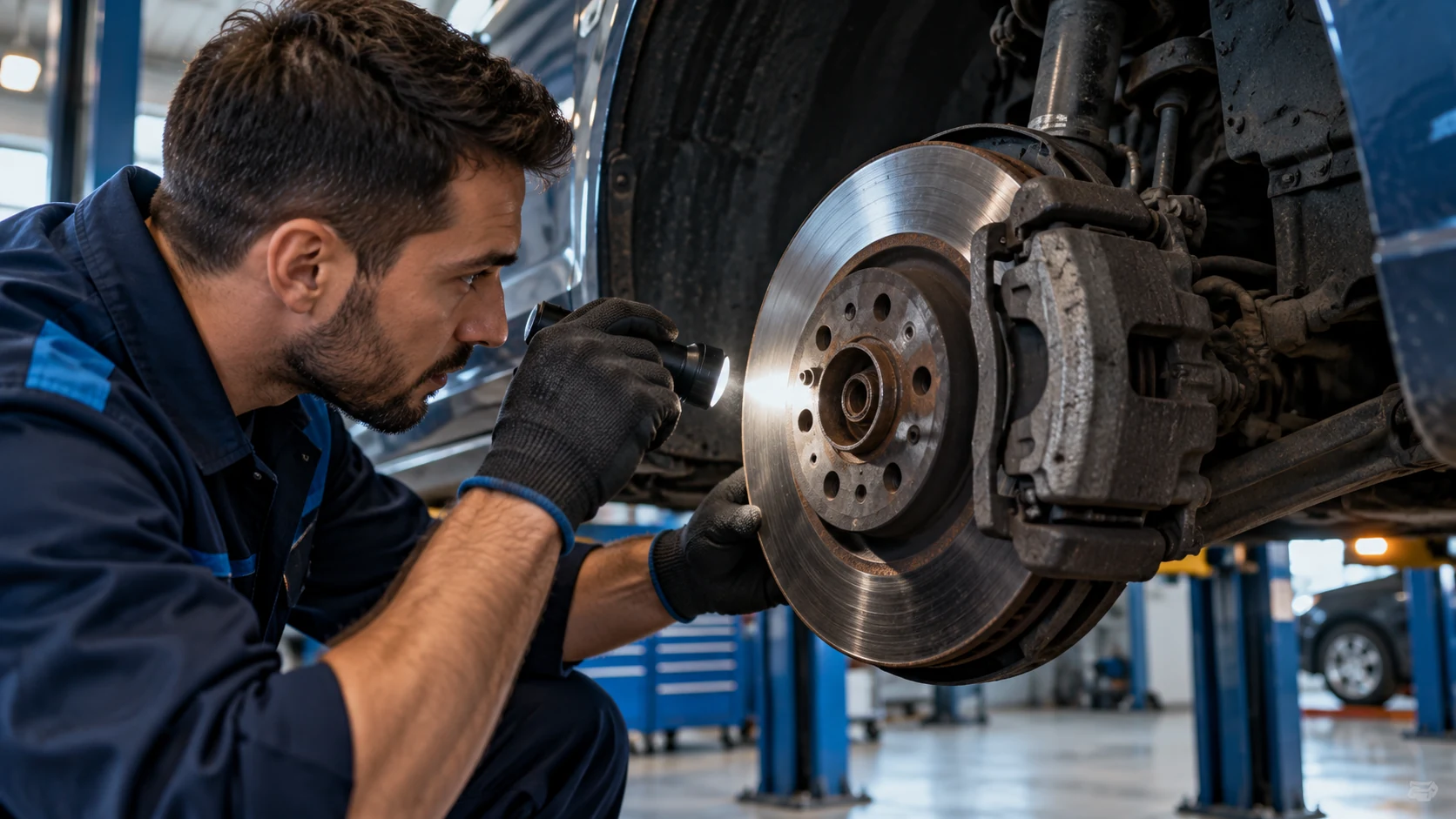
Brakes should be checked if you hear a noise, feel vibration or the pedal feels different. A long descent and a heavier vehicle can bring out a problem that is barely noticeable in town.
Fluids, temperature and visibility
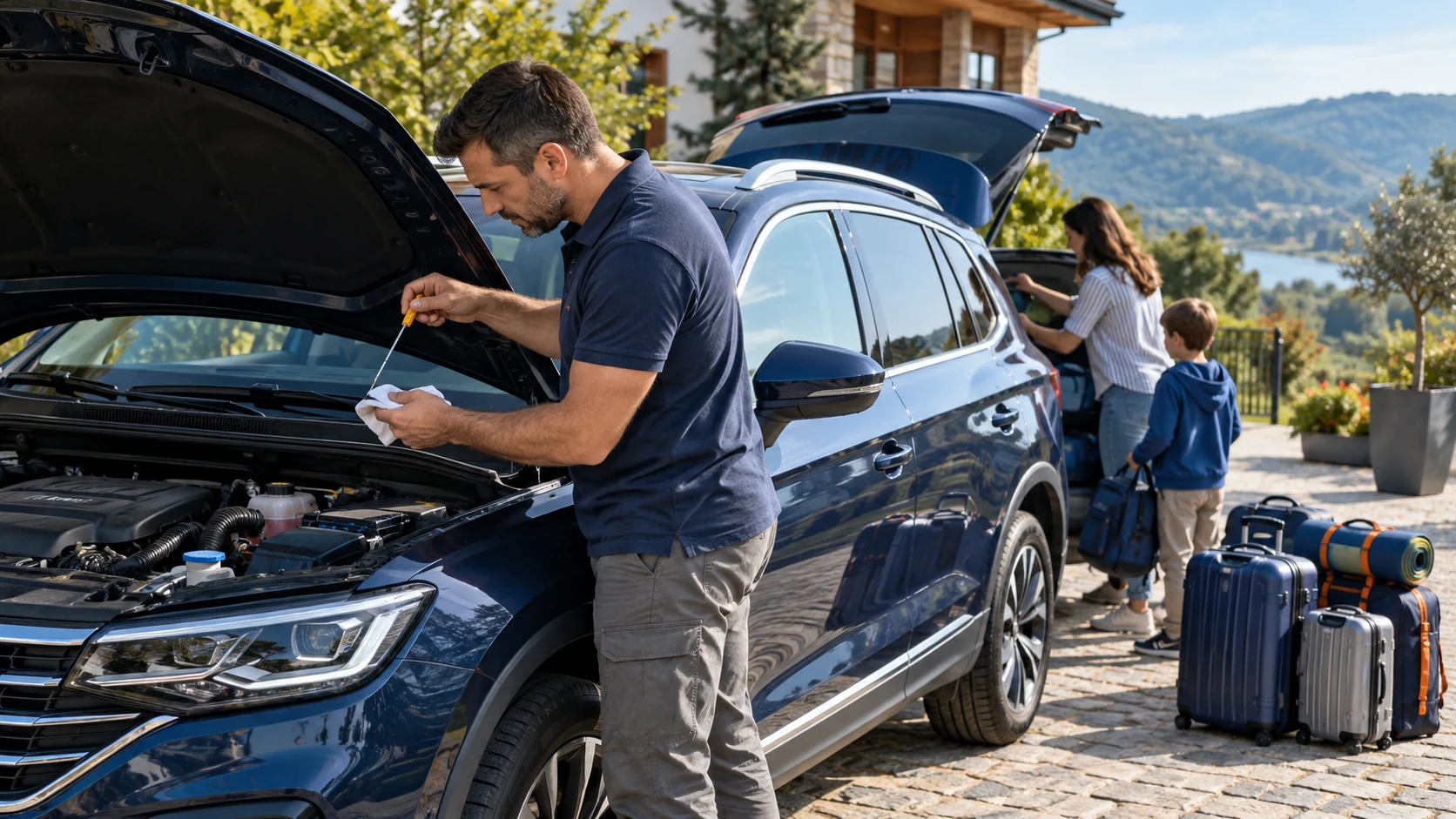
Engine oil, coolant, brake fluid and washer fluid are checked according to the manual and the vehicle's condition. Do not open a hot cooling system.
Lights, wipers and air conditioning directly affect visibility and concentration. Weak air conditioning may not stop the car, but in hot weather it increases driver fatigue.
Have a plan for if you do have to stop
Save the roadside assistance number, check what your package covers and bring a charger. Keep vehicle documents and insurance within reach, not at the bottom of the trunk.
Good preparation does not mean a breakdown cannot happen. It means you have reduced the likelihood and know whom to call and what to expect.
Key points
Three things to remember
- 01
Book the check early enough for any finding to be dealt with.
- 02
Adjust the pressure to the manufacturer's recommendation for a loaded vehicle.
- 03
Check documents, insurance and roadside assistance along with the technical condition.
FAQ
Straight answers
How far in advance should the check be done?
Early enough to leave time for parts and repair if a problem is found. The exact timing depends on the trip and the vehicle's current condition.
Should I increase the pressure when the car is full?
Use the value the manufacturer gives for a loaded vehicle. Do not choose a pressure from memory.
Is air conditioning a safety matter?
It affects demisting, visibility and driver fatigue, so working air conditioning is more than a comfort.
Sources and further reading
This article is informational. Check regulations, conditions and changing figures before a specific procedure.