In short
Have the brakes checked if you notice squealing or grinding, vibration, pulling to one side, a soft or hard pedal, a longer stopping distance, a leak or a warning light. If braking is much weaker or the pedal sinks, stop safely and do not continue driving without professional advice.
Describe the feel, the sound and the moment
It helps a service center a great deal to know whether a noise appears on the first braking in the morning, only under light pressure or at higher speed. Vibration in the pedal, the steering wheel or the whole vehicle also points the check toward different parts.
Do not immediately conclude that the pads are to blame. Discs, calipers, fluid, hoses, bearings, tires and suspension parts can all affect what you feel.
Signs to stop driving
If the pedal suddenly sinks, braking is much weaker, the vehicle pulls hard, you see a leak, or a red light comes on with a change in behavior, the goal is no longer to make your appointment. Stop in a safe place and ask for advice or transport.
Continuing to drive can make the fault worse and endanger you and other road users.
Why a visual check is not enough
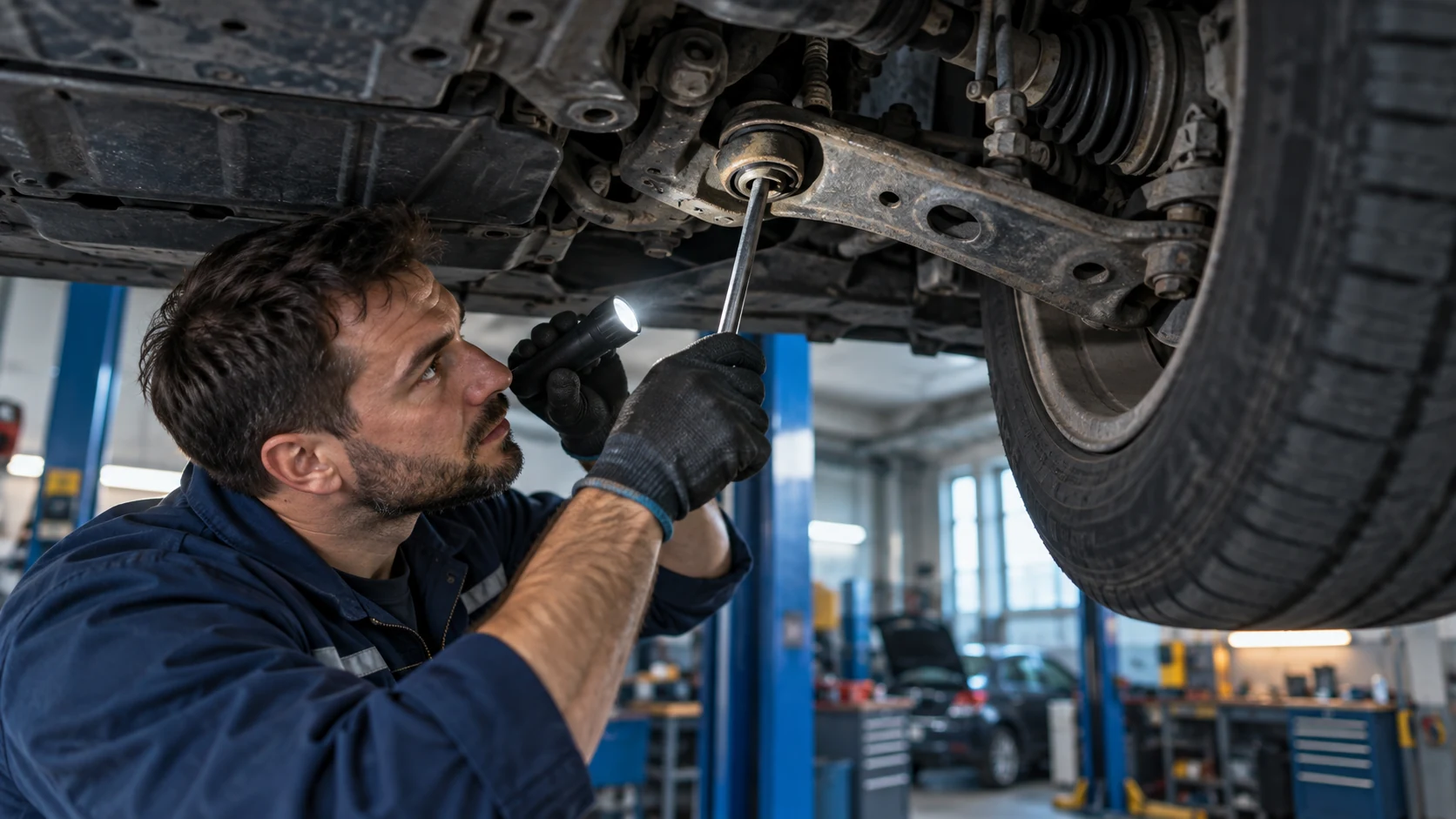
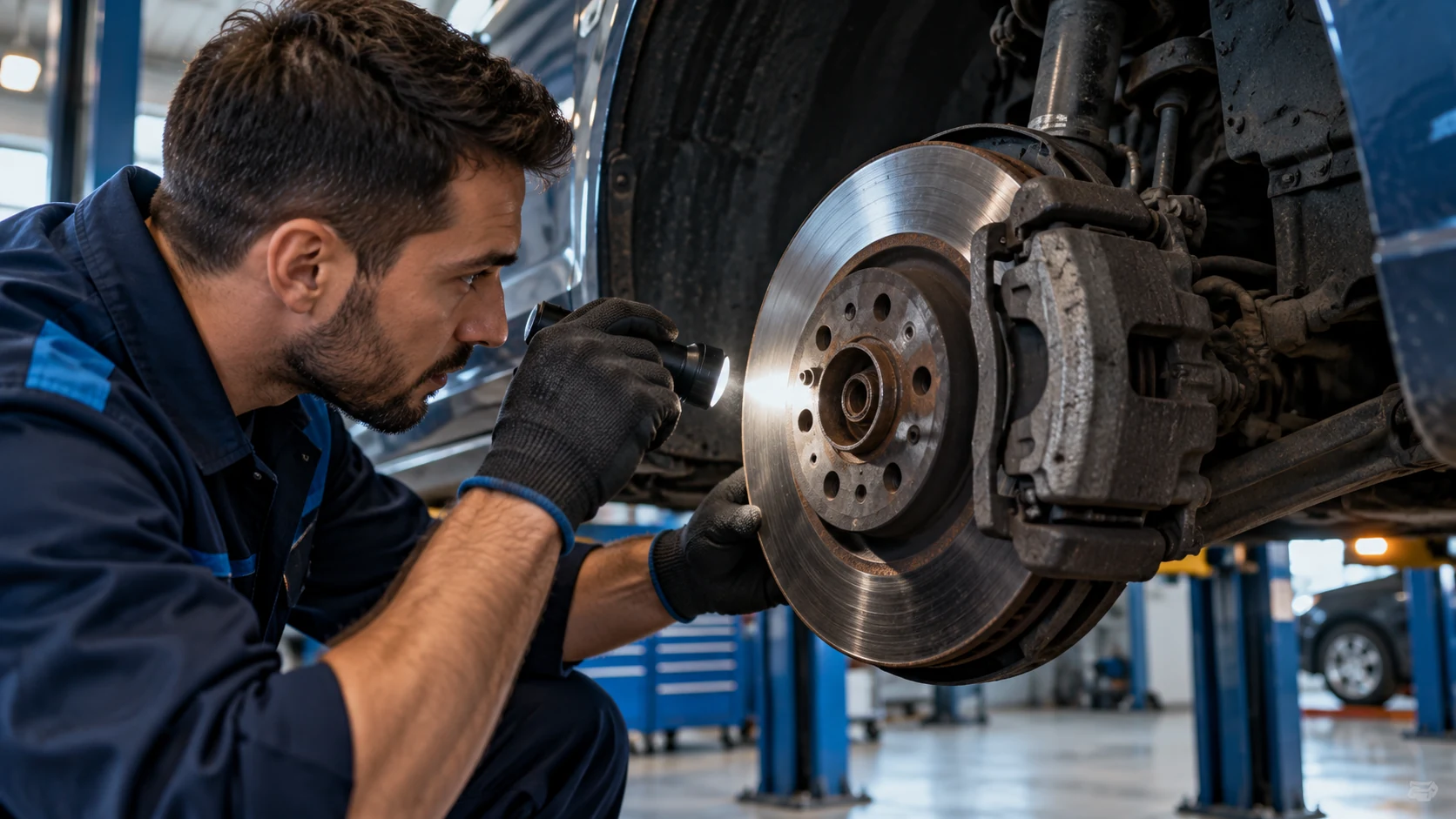
Pad thickness and disc condition matter, but a full check includes caliper operation, fluid, hoses, electronic systems and behavior under braking. Some problems show up only through measurement or a test under controlled conditions.
Replacing a part without establishing the cause can leave the symptom in place and needlessly increase the bill.
What to prepare for the service center
Say when the problem started, whether there has been work on the wheels or brakes, whether it changes with temperature and whether a warning light is on. If you can do so safely, photograph the message on the instrument panel.
The service center then confirms the finding, explains the priority and asks for your approval of the work. With brakes, there is no point promising a price before the complete condition has been checked.
Key points
Three things to remember
- 01
Report a change in braking precisely: when, at what speed and under what conditions.
- 02
Grinding, a sinking pedal and weaker braking are not to be put off.
- 03
A check covers the system, not just replacing pads on a guess.
FAQ
Straight answers
Does squealing always mean the pads are worn?
No. It can be related to the material, moisture, deposits, the disc or another condition. A check confirms the cause.
Why does the steering wheel shake when braking?
Possible causes include uneven brake operation, the discs, wheels or suspension. The symptom should be checked, not diagnosed remotely.
Can I drive if the brake warning light is on?
If it is red or braking has changed, stop safely and get professional advice. Check what the light means in the vehicle's manual.
Sources and further reading
This article is informational. Check regulations, conditions and changing figures before a specific procedure.