In short
For a family trip, check proper, age-appropriate protection for children, seat belts for all passengers, the arrangement and securing of luggage, tire pressure for the load and a plan for breaks. Keep heavy items low and secured, and make a schedule that does not have the driver racing an arrival time.
The seat must suit the child and the vehicle
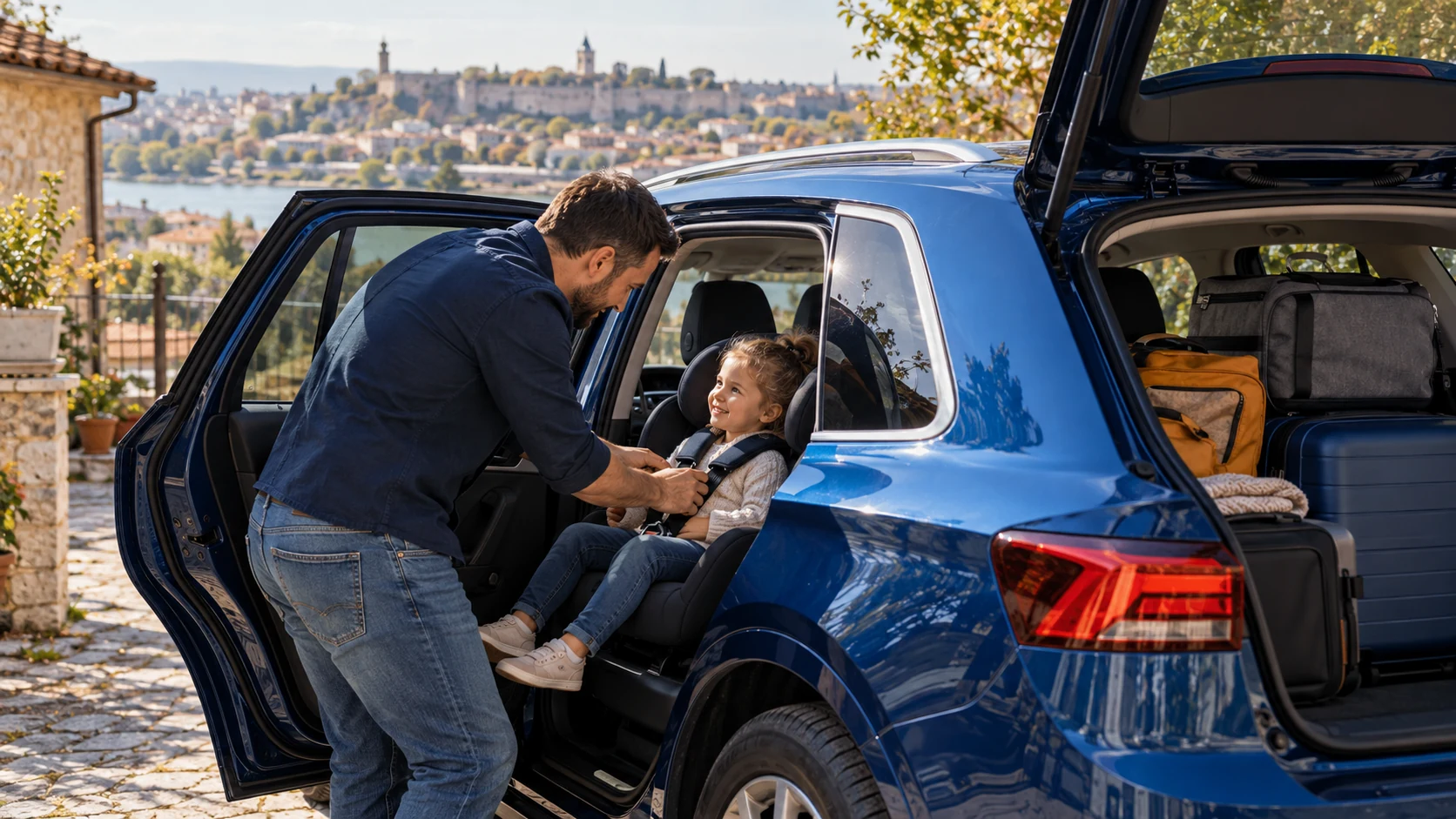
Choose a system according to the rules in force, the child's height and age, and the manufacturer's instructions. Check the fitting method and tension before the day you leave.
A thick jacket can affect how the belt sits, and a loose belt does not protect as intended. If you are not sure about the fitting, ask for a professional check.
The cabin should not become a shelf
A phone, bottle, tablet and other hard objects can become projectiles under hard braking. Use closed compartments and holders, and put heavy bags low and against the backrest.
Do not block your view and do not load the vehicle beyond the permitted limits.
A full car calls for a check of tires and lights
Adjust the pressure to the recommendation for a loaded vehicle. See whether the rear sits too low and whether the headlights are correctly set if the vehicle has manual adjustment.
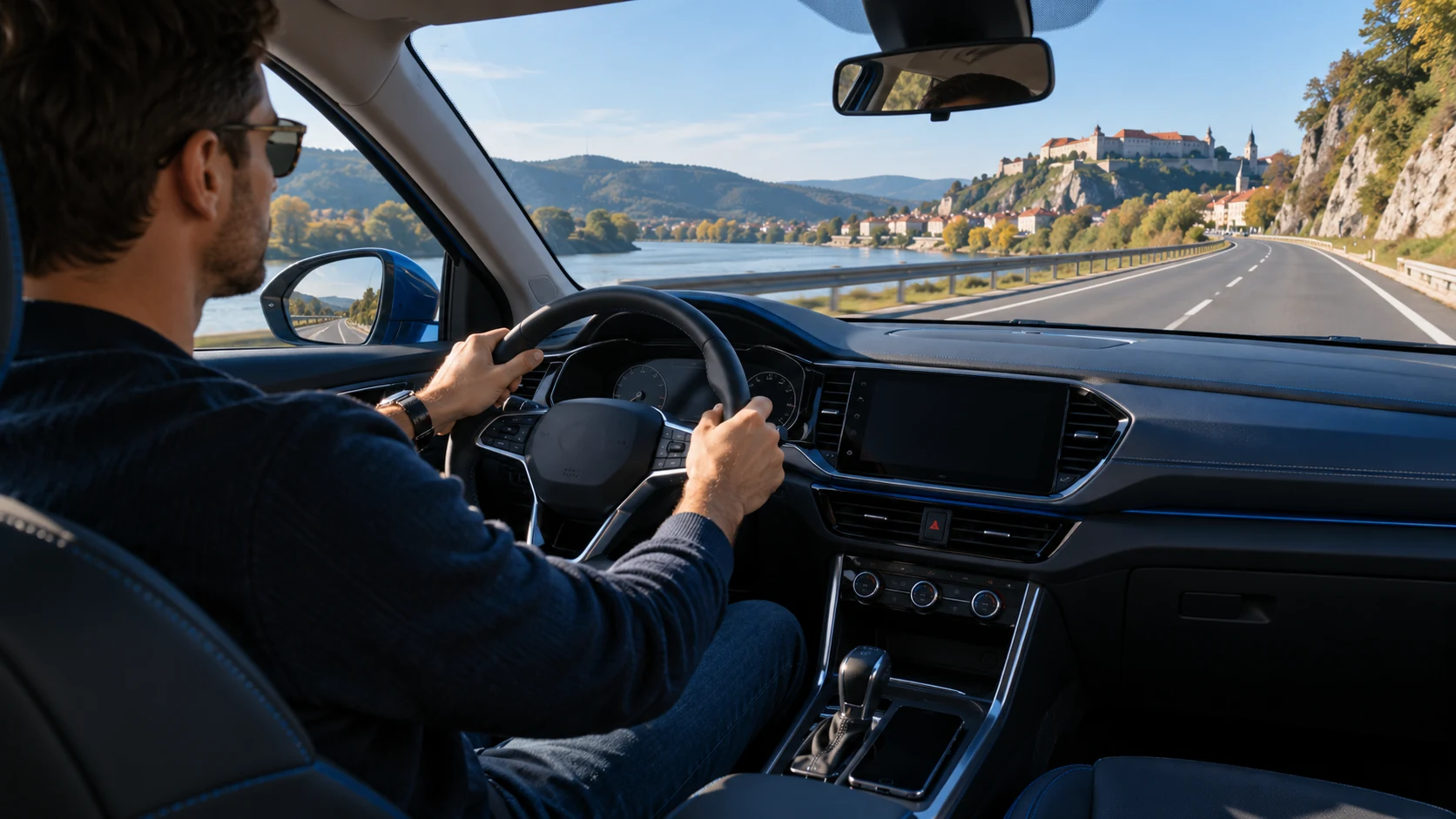
Brakes, fluids and air conditioning should be checked before the trip, especially when heat, mountains or a long highway stretch await you.
A break is part of the itinerary
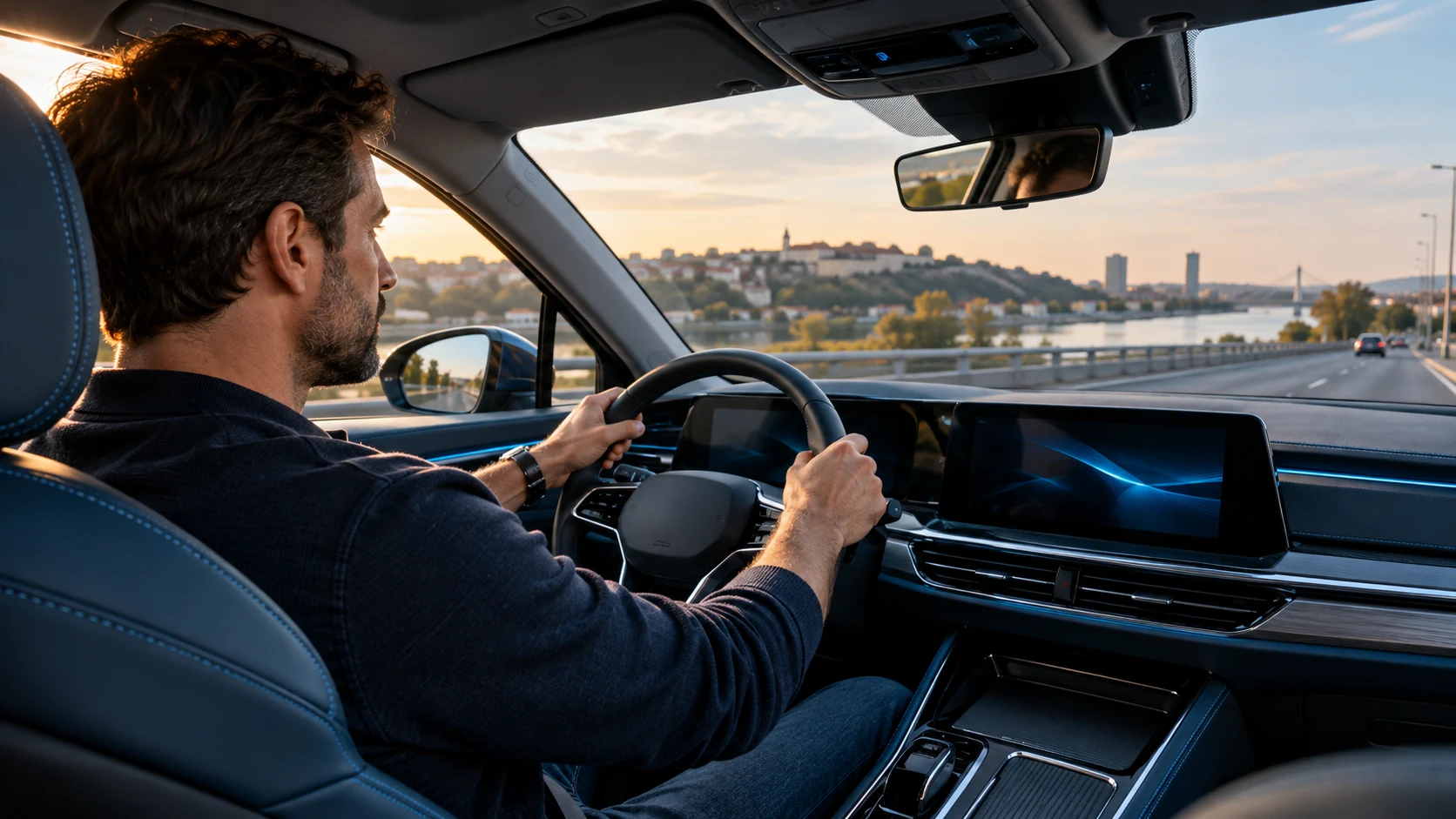
Children, the driver and passengers have different rhythms. Plan more time than the navigation shows and choose safe places to rest.
If the driver is tired or nervous about being late, arriving a few minutes earlier is not worth the risk.
Key points
Three things to remember
- 01
Every passenger uses a suitable restraint system on every part of the trip.
- 02
Heavy luggage goes low and must be secured.
- 03
Plan breaks before fatigue or nerves take over the driving.
FAQ
Straight answers
Where should the heaviest suitcases go?
Low down, as close as possible to the rear seat backs and so that they cannot move freely. Follow the vehicle's manual.
Can a child go without a seat on a short trip?
Protection is needed on every trip, and how it applies depends on the rules in force and the child's characteristics. A short trip does not remove the risk.
How often should we take a break?
Plan regular breaks and stop earlier if fatigue, restlessness or reduced concentration appears. Do not wait until the driver can barely keep their eyes open.
Sources and further reading
This article is informational. Check regulations, conditions and changing figures before a specific procedure.