In short
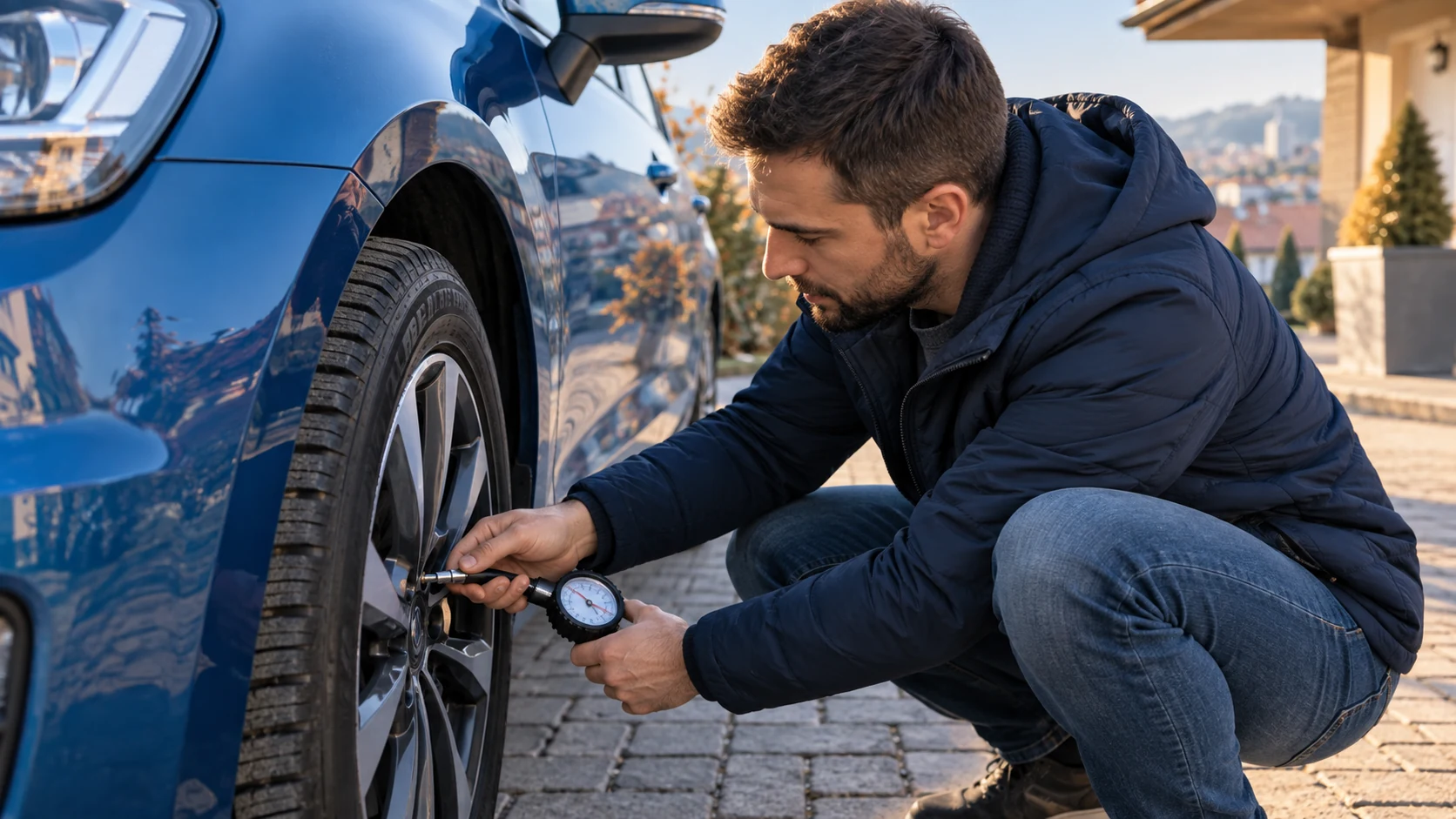
Check the pressure when the tires are cold and set it according to the vehicle manufacturer's recommendation for the size and load. The value is usually on the door frame, the fuel flap or in the manual, while the marking on the tire sidewall is not a target for everyday adjustment.
Where to find the right value
The vehicle manufacturer sets the pressure for a given size and load. The sticker is often on the door frame or fuel flap, and the figures are also in the manual.
The front and rear axles can have different values, as can an empty and a fully loaded vehicle.
Why it is measured cold
Air heats up while driving and the pressure rises. Measuring after a long drive can lead you to let air out of a tire that was correctly set before you left.
If you have to top up a warm tire, follow the manufacturer's instructions and check again once it has cooled.
Too low and too high pressure change the behavior
Low pressure increases deformation and heating, can speed up shoulder wear and worsen handling. High pressure can reduce comfort and speed up wear in the center of the tread.
The right value supports load capacity, behavior and even wear, but it does not fix a damaged or old tire.
When topping up is not the solution
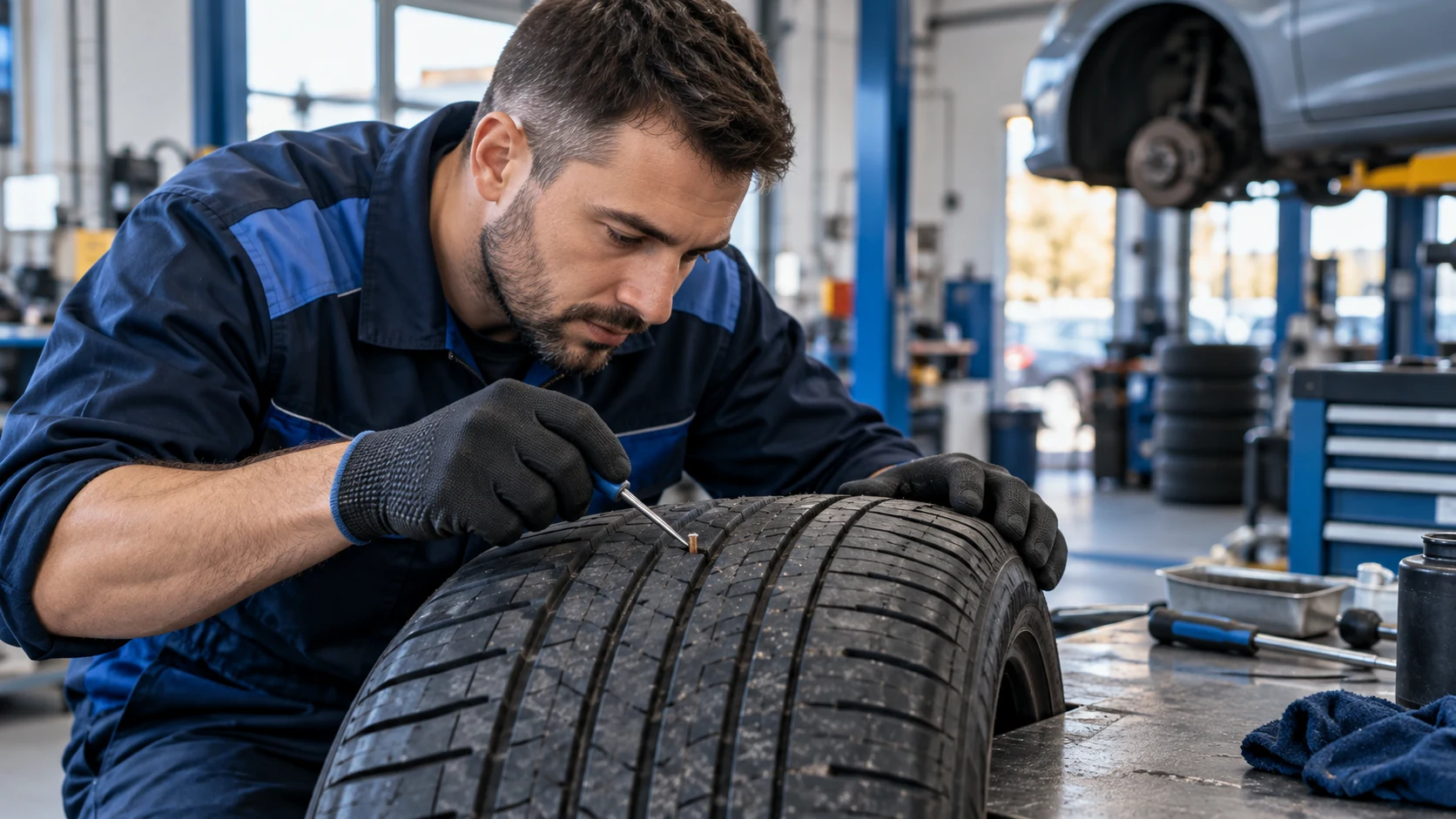
If the same tire keeps losing pressure, it needs a check for a puncture and of the valve, bead seating and rim. A TPMS warning after adjustment may require calibration according to the vehicle's manual.
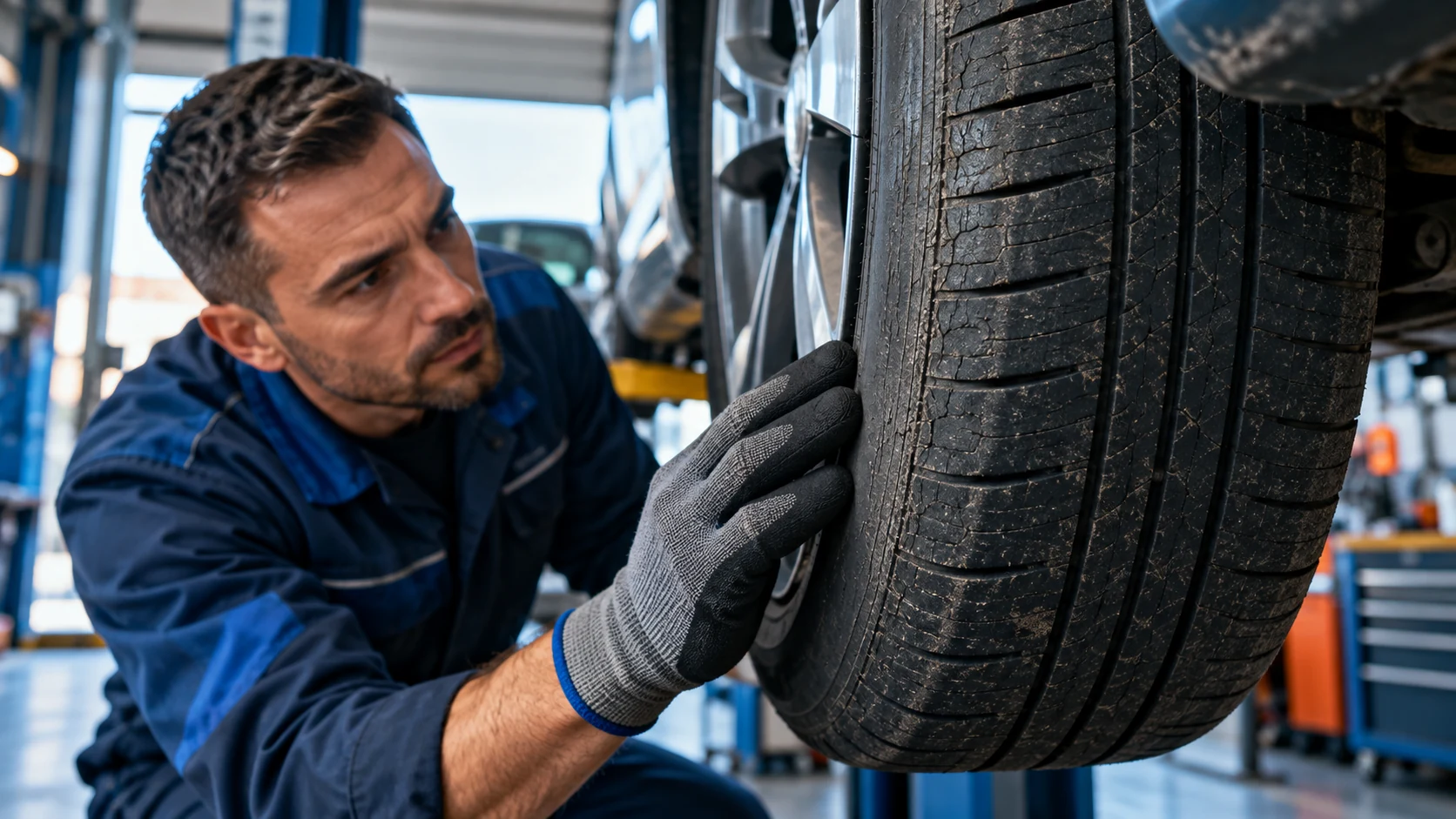
A sudden loss, a bulge or a damaged sidewall calls for stopping and a professional assessment.
Key points
Three things to remember
- 01
Measure on cold tires.
- 02
Use the vehicle's recommendation for the current load.
- 03
Repeated pressure loss calls for a check of the tire, valve and rim.
FAQ
Straight answers
How often should I check the pressure?
Regularly, at least monthly and before a long trip, as well as after a large change in temperature or load.
Does nitrogen change the recommended pressure?
No. Whatever the gas, the target is the value given by the vehicle manufacturer.
Why is the light on when the tires look full?
A visual estimate is not accurate. Measure all the tires and check the calibration procedure; if the warning stays on, the system needs a check.
Sources and further reading
This article is informational. Check regulations, conditions and changing figures before a specific procedure.