In short
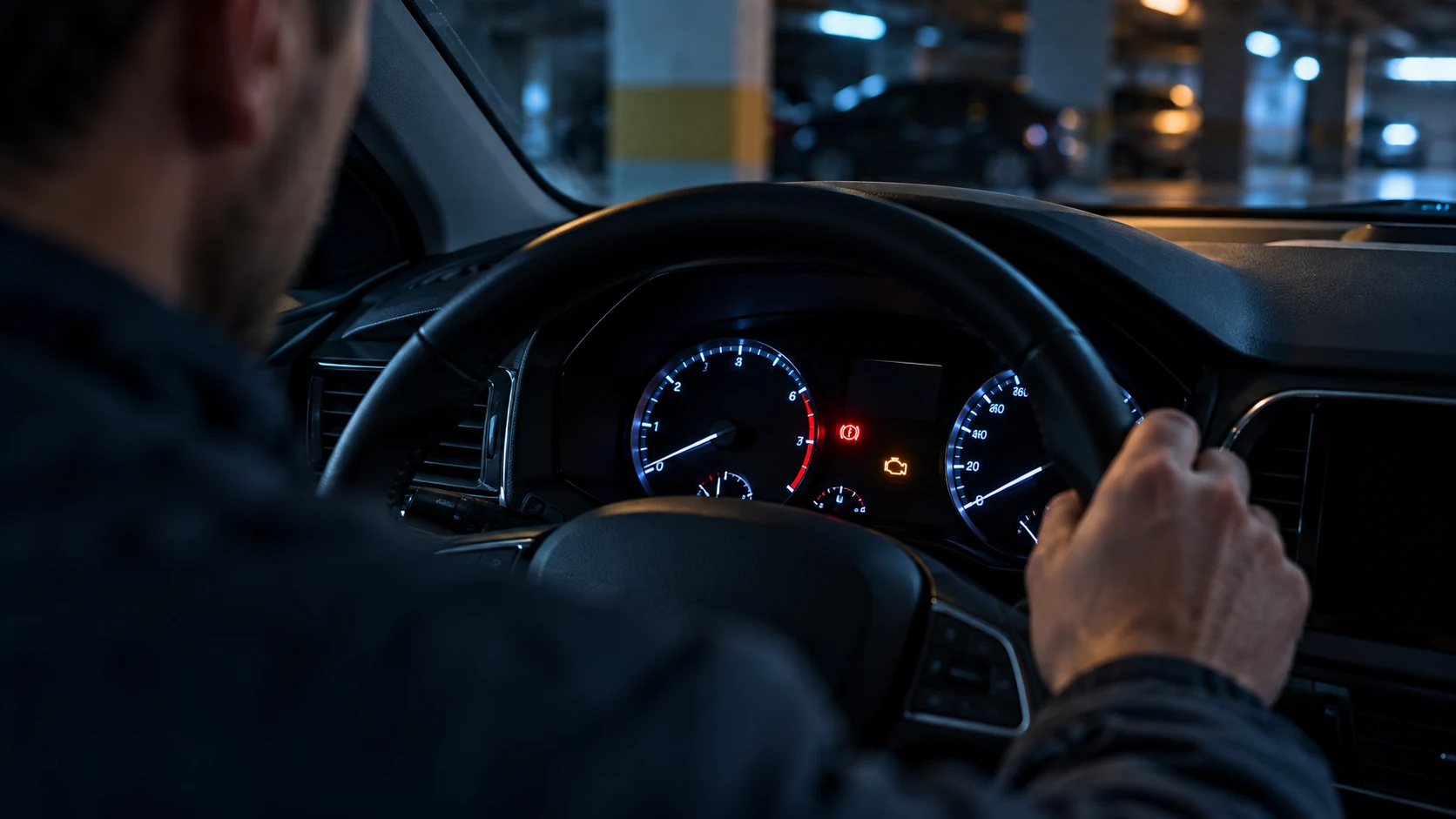
A red light usually signals a serious warning or a condition that requires a safe stop, yellow or orange means a check is needed, and green and blue show an active function. Symbols differ between vehicles, so check the manual and, along with the light, pay attention to temperature, sound, smell and how the car behaves.
Color sets the level of attention, not the whole diagnosis
Red warnings usually concern serious conditions such as oil pressure, overheating or the brake system, but the symbol and vehicle model must be checked. Yellow warnings often allow limited driving until a check, but not all of them and not in all conditions.
Green, blue and white symbols mostly confirm an active function, such as the lights, but here too you should know the specific symbol.
Watch the car, not just the dashboard
If, along with the light, the engine loses power, you hear a bang, the temperature rises, or you smell fuel or burning, the situation is more serious than the same light with no other symptoms. Pull over safely and do not carry on at any cost.
A flashing light can mean something different from one that stays on. Make a note of exactly that.
Why a light sometimes goes out
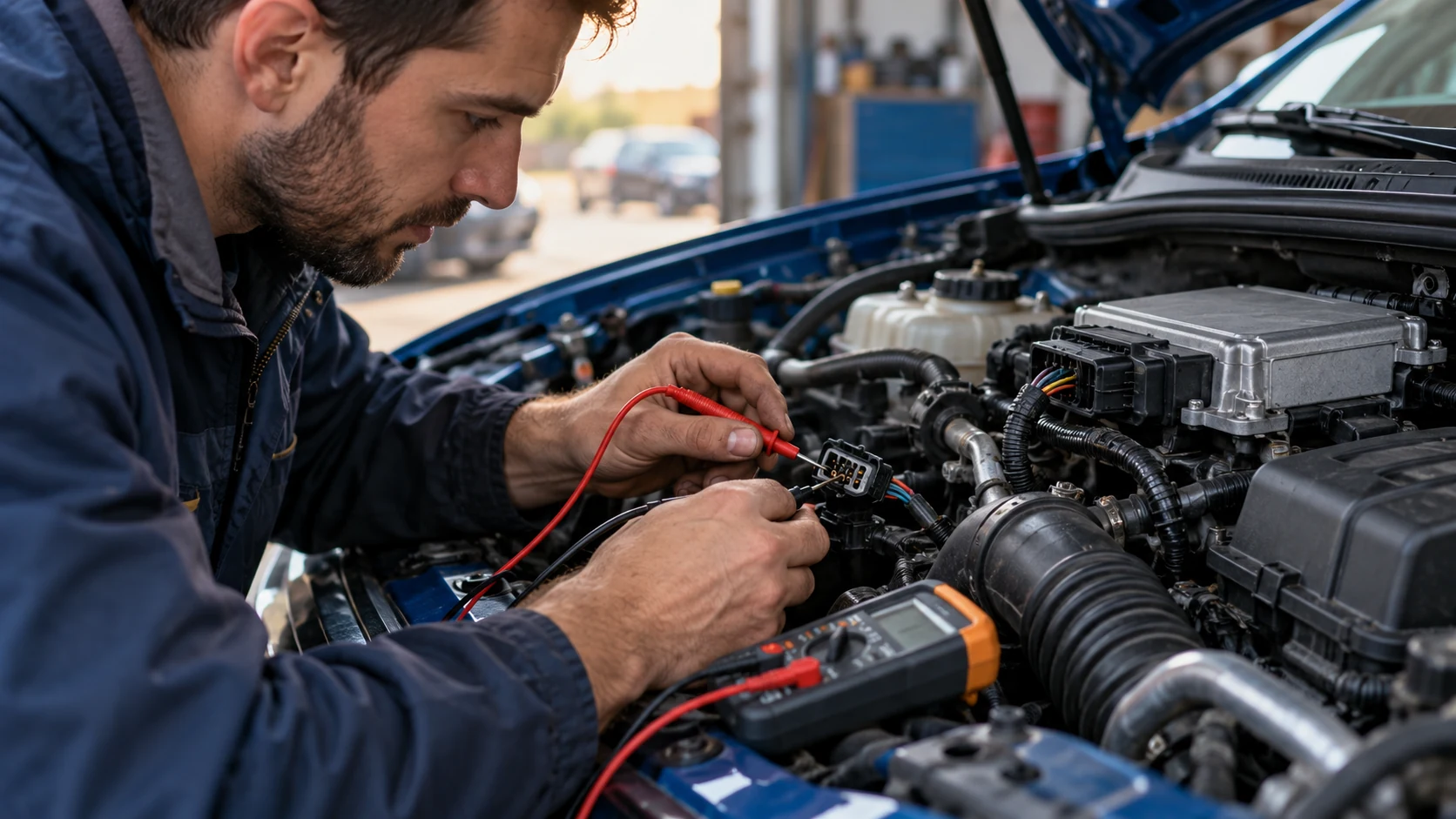
An intermittent fault can disappear from the dashboard while a record stays in the control unit. The conditions in which it appeared, such as temperature, moisture, vibration or load, may be the key to finding the cause.
A light going out is not proof the fault has been fixed. If it keeps returning, diagnostics should cover the record and real measurements.
What to send the service center
Photograph the symbol and the message text while the vehicle is safely stopped. Write down the speed, engine temperature, weather and what happened just before.
Do not clear faults before the check unless you have to, because that can lose a useful clue.
Key points
Three things to remember
- 01
Do not interpret a symbol by color alone; open the manual for your vehicle.
- 02
A red light with a change in how the vehicle runs needs urgent assessment.
- 03
Photograph the message before switching off the ignition, if it is safe.
FAQ
Straight answers
Can I drive with the check engine light on?
It depends on whether it is steady or flashing, how the engine runs and what the manufacturer says. Flashing or poor running calls for a more urgent reaction; for exact advice, give the vehicle and the symptom.
What if a red light comes on and then goes out?
Note the symbol and conditions and check the vehicle. An intermittent warning can point to a break in a circuit, a fluid level or another recurring problem.
Does disconnecting the battery terminal solve the light?
It does not solve the cause, and it can erase clues and reset systems. Diagnostics should come before any random reset.
Sources and further reading
This article is informational. Check regulations, conditions and changing figures before a specific procedure.